Editorial photograph of a tower crane and aerial lift at a Miami construction site at dusk, conveying the construction-equipment context.

Construction Equipment Attorney · South Florida

Miami Construction Equipment Accident Lawyer

Cranes, forklifts, aerial lifts, and power tools each operate under specific OSHA rules and design standards. Failures here support product-liability claims.

  • OSHA equipment standards and ANSI compliance
  • Product-liability claims against manufacturers
  • Free consultations in English and Spanish

Equipment Failures Open Product-Liability Claims Beyond Workers' Comp

Cranes, forklifts, aerial lifts, and power tools each have their own OSHA standards, ANSI design requirements, and manufacturer specifications. When the equipment fails or is operated outside its design envelope, the injuries are usually severe and the case extends beyond the jobsite to the equipment manufacturer and the rental operator.

The Marin Law Offices preserves the failed equipment immediately and engages qualified mechanical and human-factors experts to evaluate the failure mode. Product-liability claims often produce coverage that workers' comp cannot reach.

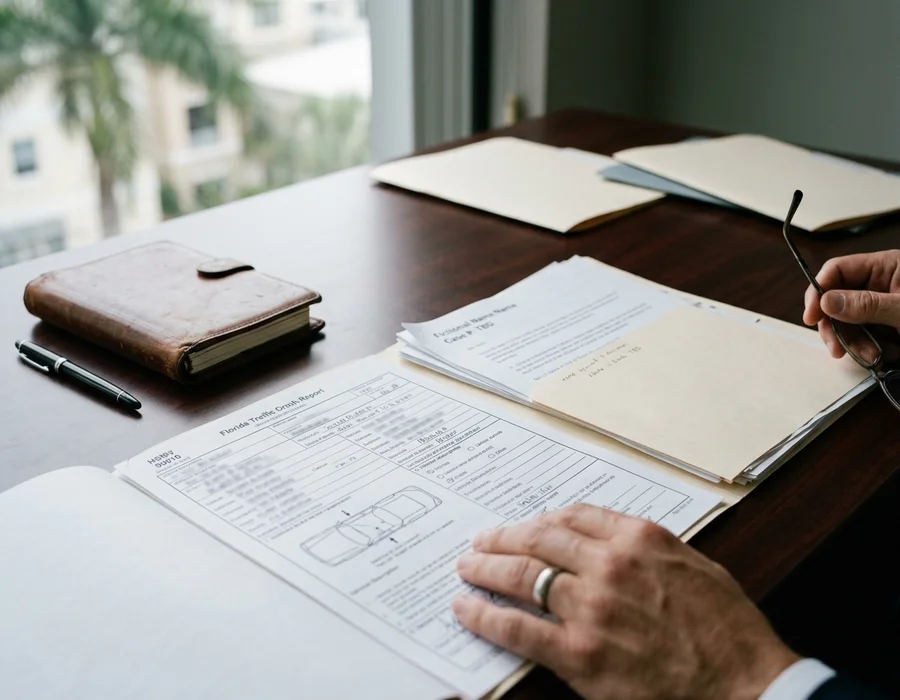
Documentary photograph of a crane inspection log, ANSI standards reference, and equipment-failure report on an attorney's desk.

Where Equipment Cases Are Won

Specific levers in construction-equipment claims.

  • Equipment Preservation

    Failed equipment preserved immediately. Disposal or repair without preservation can defeat product-liability claims.

  • OSHA & ANSI Audit

    Compliance evaluated against the applicable OSHA standard (Subpart N for cranes, others for specific equipment) and ANSI design standards.

  • Product Liability Reach

    Manufacturers, distributors, rental operators, and maintenance vendors each face independent exposure for defective equipment.

  • Operator Training Records

    OSHA-required training and certification for crane, forklift, and aerial lift operators audited for compliance.

  • Bilingual Service

    Full case handling in English and Spanish.

  • No Up-Front Cost

    Free consultations and contingency-fee representation.

Equipment Cases We Handle

Common construction-equipment incidents.

Tower Crane Incidents

Crane collapses, dropped loads, and operator-error cases under OSHA Subpart CC.

Forklift Accidents

Tip-overs, pedestrian strikes, and load-handling failures under OSHA 1910.178.

Aerial Lift Failures

Scissor-lift and boom-lift incidents from operator error, equipment defect, or unstable surfaces.

Power Tool Injuries

Saws, grinders, nail guns, and handheld equipment causing amputation and severe lacerations.

Heavy Equipment Cases

Excavators, loaders, and dozers in struck-by, caught-between, and rollover scenarios.

Energized-Equipment Cases

Equipment contact with overhead power lines and electrocution incidents.

How an Equipment Case Moves

From first call through resolution.

  1. 1

    Free Consultation

    We identify the equipment, the manufacturer, and the rental or supply chain, and explain product-liability versus comp tracks.

  2. 2

    Equipment Preservation

    Immediate spoliation letters to preserve the failed equipment and any maintenance and inspection records.

  3. 3

    Mechanical & Human-Factors Analysis

    Qualified experts evaluate the failure mode against design specifications and applicable standards.

  4. 4

    Demand or Suit

    Documented demand against every responsible party. Federal-court litigation when diversity jurisdiction applies.

What Clients Say

★★★★★

5.0 from 50 Google reviews

★★★★★

“Donny has been a phenomenal person to work with during my legal representation. Very professional, supportive, honest, and will fight for your case.”
A

Adam

★★★★★

“Very professional and informative. Made sure I understood everything along the way. Highly recommend.”
C

Carlos

★★★★★

“Literally the best experience. 10/10 recommend!”
F

Frankeria

Representative Workflow

How a Forklift Tip-Over Case Gets Built

The Problem

A worker is injured when a forklift tips over while moving a load on a Miami warehouse jobsite. The rental company points to operator error. The injuries include a crushed lower extremity requiring multiple surgeries.

Our Approach

The firm preserves the forklift immediately, pulls the rental contract and maintenance records, and engages a forklift-design expert. The equipment shows worn tires and a defective seat belt interlock. Operator training records reveal certification gaps under OSHA 1910.178.

The Outcome

Product-liability claims against the rental company and the manufacturer proceed alongside the workers' comp claim. Negotiations expand far beyond what comp alone provides.

  • Immediately

    Equipment preserved

  • Mechanical, training

    Experts engaged

  • $0

    Up-front client cost

  • English & Spanish

    Languages of service

Documentary photograph of forklift maintenance records, OSHA citation, and expert analysis report on an attorney's desk.

Construction Equipment Questions

What is OSHA Subpart CC? +
Subpart CC of 29 CFR 1926 is the OSHA standard for cranes and derricks in construction. It covers operator qualification, signal-person duties, inspections, assembly, and prohibited work zones. Violations support negligence claims and inform the duty analysis.
Can I sue the equipment manufacturer? +
Yes, when a design or manufacturing defect contributed to the injury. Product-liability claims in Florida cover design defects, manufacturing defects, and failure-to-warn theories. Preservation of the failed equipment is essential.
What is OSHA 1910.178? +
Section 1910.178 covers powered industrial trucks, including forklifts. It requires operator certification, inspection before each shift, and rules for stability, load-handling, and pedestrian safety. Violations are common and well-documented in forklift cases.
Does the rental company have liability? +
Yes, where the rental company supplied defective equipment, failed to maintain it, or failed to provide safe-use instructions. Rental-company liability is separate from manufacturer liability and adds another insurance layer.
What if I am not certified to operate the equipment? +
Operator certification is the employer's responsibility under OSHA. An uncertified worker is generally still entitled to recover under workers' comp and may have third-party claims against the GC and other contractors that allowed the operation.
How quickly should the equipment be preserved? +
Immediately. Disposal, repair, or transfer of the failed equipment without preservation can defeat product-liability claims through spoliation defenses. We send preservation letters the day of intake.
What injuries do equipment cases produce? +
Crush injuries, amputations, traumatic brain injuries, and electrocution are common. Equipment cases often produce surgical interventions and long recoveries, with substantial future-care and earning-capacity damages. Worker testimony alone rarely carries an equipment case to its full value, which is why expert mechanical analysis, training-record audit, and OSHA citation history all factor into the demand workup the firm prepares.
What about equipment-contact electrocutions? +
Equipment contact with overhead power lines is a leading cause of fatal electrocution on jobsites. OSHA's clearance rules and the utility's safety duties together create the case framework.
How long do I have to file? +
Florida's statute of limitations for most negligence-based injury claims is two years from the date of injury for accidents on or after March 24, 2023. Product-liability claims follow the same window with statute-of-repose limits on older products.
Blue-hour photograph of construction equipment at a Miami jobsite used as the backdrop for the equipment-injury call to action.

Free Consultation · English & Spanish

Hurt by Construction Equipment? Preserve It Today.

Failed equipment is the key to product-liability recovery. A free, no-pressure call starts the preservation process now.